Showing posts with label peak oil. Show all posts

Monday, August 19, 2013

Our Clean Energy Future

Cross posted from Peak Energy - Our Clean Energy Future.

Following on my recent post bidding Farewell to The Oil Drum, I'd like to have a look at what I view as our longer term future for energy production and consumption.

As noted in my previous post, for the time being the combination of unconventional oil extraction and the ramping up of extraction of natural gas (from both conventional and unconventional sources) has continued to push the point of peak oil production out into the future, defying the predictions of the more pessimistic peak oil observers. During this period we have seen a boom in the research and development of solutions to help us eliminate our dependency on fossil fuels, which I'll explore in this post.

Solutions can be divided into 3 groups :

  • Renewable energy - solar power, wind power, geothermal power, hydro power, ocean energy and biomass derived power (including biofuels)
  • Distribution of renewable energy - energy storage and the electricity grid
  • Adopting alternatives to oil and other fossil fuels - electric transport, bioplastic, alternatives to fossil fuel based fertiliser and new models for manufacturing, construction and agriculture

Renewable Energy

The graphic below shows the energy available from renewable energy sources annually compared to global energy consumption. The numbers are intended to give a rough idea of relative scale - for any given energy source a wide range of estimates can be found in the literature so the numbers are indicative.

These numbers in some ways understate the amount of energy potentially available (ignoring solar power potential at sea or in space, for example, or wind power at high altitudes or far offshore, or geothermal power deep below the surface of the earth) but still serve the demonstrate that the renewable energy available to us is orders of magnitude larger than our current global energy consumption.

The contribution made by renewable energy to our energy needs is expected to exceed that made by gas (and double that made by nuclear power) by 2016, though progress needs to be accelerated if we wish to create a sustainable energy system.

Solar power

Solar power is the largest energy source available to us, dwarfing all other sources - renewable and non-renewable. Approximately 36,000 Terawatts of power could be captured by land based solar power generation - compared to current global energy use of around 16 TW. As a result, most of the plans floated for shifting to 100% renewable energy (examples include proposals by Mark Jacobson and Stuart Staniford and local plans for countries like Germany and Australia) rely primarily on solar power.

Solar power is not only the largest energy source available to us but it is also the fastest growing energy source, with solar power generation increasing by over 58% in 2012.

There are a number of options for harnessing solar power - power generation using solar photovoltaic (PV) cells and solar thermal arrays along with passive solar techniques such as solar hot water heaters.

I have been of the view that solar thermal power generation (also known as concentrating solar power or CSP) would become our most important source of power in the longer term. This view was based on a number of advantages that solar thermal possesses - it does not require rare or expensive materials (enabling it to scale without hitting resource limits), it can be built on (and is best suited to) arid land that has few other uses, it can incorporate energy storage (thus avoiding the intermittency issue), it is compatible with the existing centralised generation model and it can be combined with traditional sources of power generation (coal or gas) in hybrid power plants that allow an easy transition using existing connections to the electricity grid.

An area of desert around 250 km by 250 km covered with solar thermal power generation could supply all the world's current electricity demand.
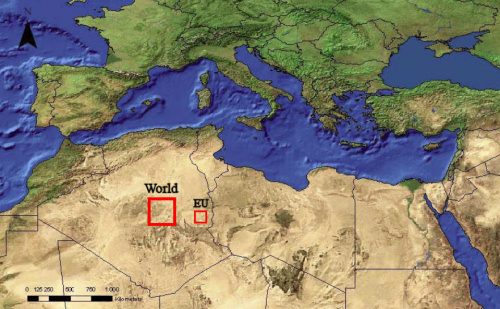
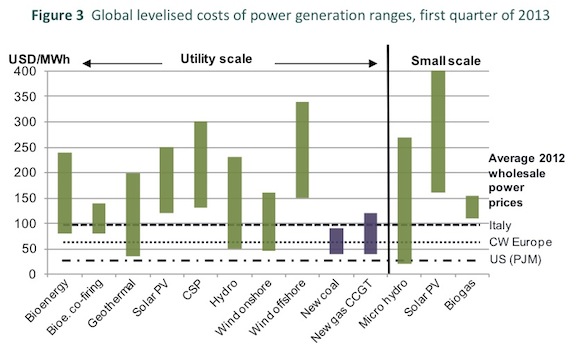
To my continuing dismay, this hasn't happened yet (though it was our fastest growing energy source in 2012) - primarily due to the lack of progress in pushing down costs - the LCOE (levelised cost of energy) of solar thermal still being around twice that other renewable energy options.
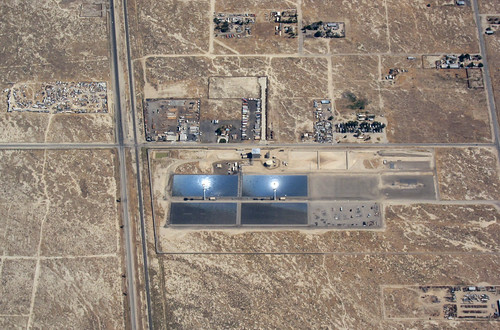
I retain some hope given that solar thermal technology remains relatively immature - there was a very long gap between the original plant (SEGS) built in California in the 1980s and the next generation of plants built in Spain beginning in 2007 and the south west of the US shortly afterwards.

Construction of plants is now spreading around the globe, with plants being built in Abu Dhabi, Kuwait, Saudi Arabia, Egypt, Israel, Morocco, Algeria (though at this point the immense Desertec proposal has fallen off the radar), South Africa, India, China and Chile.

While there are encouraging signs for solar thermal power, by and large it has been eclipsed by solar PV in recent years, with solar panel prices plummeting and manufacturing capacity surging. While thin film solar has also become competitive it is traditional silicon based solar PV that has dominated after years of being dismissed as being too expensive.

Research into improving solar PV remains vibrant, with new materials and concentrating solar power techniques looking to push the cost of solar PV below that of coal or gas fired power (the holy grail of solar grid parity).

Wind power

Wind power is the second largest renewable energy source available to us, with the potential supply also exceeding current global energy demand.

Wind power has also seen rapid growth over the past decade, with generation increasing by over 18% in 2012 and accounting for more than half of new renewable energy supply. In Denmark it now supplies more than 28% of electricity consumption.

Wind power is now the cheapest source of renewable energy, with the LCOE being competitive with coal or gas fired power in many locations. Thanks to the merit order effect, wind power can also help lower the cost of power paid by consumers. While wind power is now a relatively mature technology, advances in turbine size and electromagnet technology along with optimisation of wind farm sites are allowing the overall efficiency of generation to increase further.

Like solar power, wind power can coexist with other uses of land - and large wind farm developments can also be located offshore.
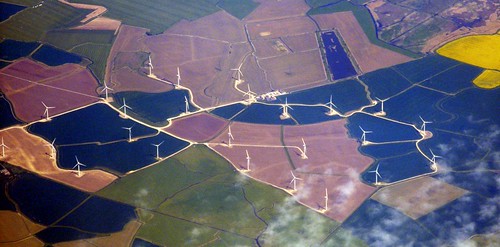
Also like solar power, wind power is criticised for its intermittency. While geographical diversity of generation (along with diversity of energy sources and expanded grids, which will be discussed later) can help to address this, energy storage can also be built into wind turbines, a technique used in new models from GE.

Hydro power

Hydro power is the most mature source of renewable energy (the burning of wood aside) and still accounts for more electricity production than solar, wind, and geothermal combined - however it has a growth rate (around 3% in 2012) lower than most other renewables.

Hydro power current provides 16% if global power generation - the 4 largest power stations in the world are all hydro power projects.

Large scale hydro power doesn't have a lot of room for growth in the developed world, though the Himalayan region and Africa both still have significant room for growth.

Microhydro power is an alternative that is underdeveloped and often has an LCOE quoted that makes it competitive with wind power and with fossil fuels - however I've never seen any useful figures outlining the energy potential from this source (if you look at some designs you'd guess that this is something that could be deployed very widely).
Geothermal power

Geothermal energy is unusual compared to other large renewable power sources, in that it provides "baseload" power (thus placating those suffering from the "baseload fallacy") unlike other more intermittent sources like solar, wind and ocean power. The potential supply of geothermal energy is approximately equal to current global energy demand.

The first geothermal power generation plant was constructed in 1904 in Larderello, Italy, followed by Wairakei, New Zealand in the 1950's then the Geysers in California in the 1960’s. In 2012, 24 countries operated geothermal plants for electricity production, generating around 12 GW in total.

In 2012, growth in geothermal power was less than 3%, leaving it very much a niche energy source. Geothermal power generation is currently concentrated in geologically active areas - the western US, Indonesia, The Philippines, New Zealand, Iceland, Costa Rica, El Salvador and east Africa.

As well as active power generation from traditional geothermal power sources (including low temperature geothermal, ground source heat pumps can be used to provide direct heating.

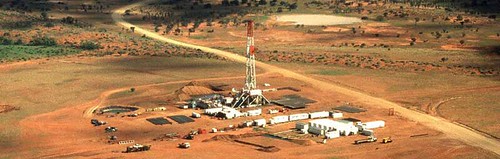
The great white hope for geothermal power generation is known as "Enhanced Geothermal System" (EGS) (or sometimes Hot Dry Rock or Hot Fractured Rock) - generating power by drilling holes deep into the earth's crust to circulate water through. The energy potential for this type of geothermal energy is vast, however progress so far in terms of producing commercial power has been very disappointing.

Some early experiments were built in Switzerland but have been shut down due to concerns about earthquakes being caused by the drilling. The most promising experiment is being performed by GeoDynamics in Australia's outback - progress has been extremely slow, with numerous setbacks occurring before a 1 MW pilot plant was finally commissioned this year. On a positive note, operation of the pilot is beating expectations.
Ocean energy

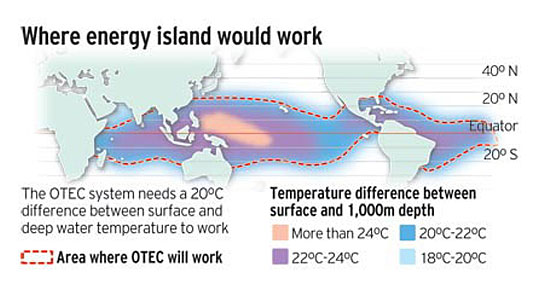
Energy can be tapped from the oceans in 3 different ways - tidal power, wave power and the little known OTEC (Ocean Thermal Energy Conversion).

While there is a significant potential resource in ocean energy - broadly equivalent to our current energy use - the technology for exploiting all 3 forms of energy remains immature and costly. Tidal power has been commercially generated since the 1960's, with France's 240 MW "La Rance" power station only recently being eclipsed in size by a South Korean project. South Korea is looking to greatly expand tidal power production over the next 5 years and a range of projects are proposed for the UK, Australia and the United States - however it appears unlikely that we will see large scale tidal power production in the next couple of decades.
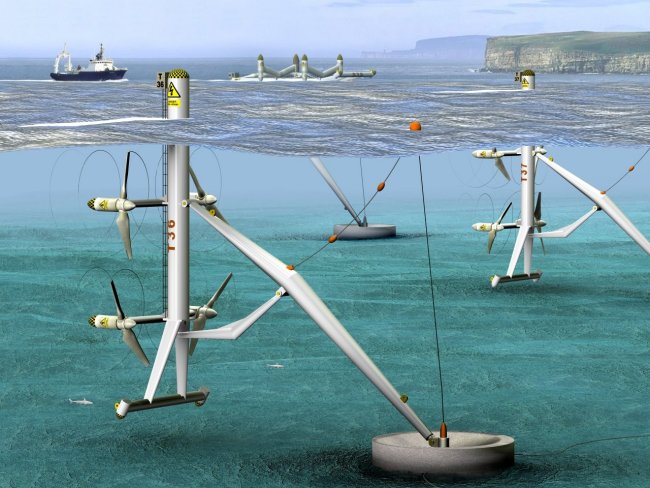
Wave power and OTEC are even less advanced, however pilot projects are at various stages of development for both of them and interest will no doubt slowly build in size over time. Another even more exotic alternative is the generation of electricity using differences in salinity between bodies of water.
Biomass, Biogas and Biofuel

Photosynthesis provides a steady stream of material that can be used for energy - with the caveat that there are limits before this impacts on our ability to produce food and maintain a healthy environment.

There are a range of ways of harnessing organic material for energy (other than the traditional approach of burning it for heat - which the REN21 (pdf) report on renewable energy notes is still the dominant use for biomass - contributing almost 7% of global energy supply) - using biomass to generate power, producing biogas which can be used for heat, power generation or for transport, producing biofuels that can replace or supplement traditional liquid fuels and for pyrolysis which can generate biodiesel, fertiliser and biochar.

Biofuels have been the subject of widespread criticism (critics citing competition with food production and low EROI) and seem unlikely to be able to replace a significant proportion of our oil consumption. Production of ethanol and biodiesel has stagnated in recent years, with production declining by 0.4% in 2012.

Other advanced biofuels such as cellulosic ethanol and algae based biofuels have failed to be produced in significant quantities thus far.

Biomass based power generation also has its critics, though most seem to agree that it is preferable to biofuel production. Global biomass power generation capacity was 58 GW in 2011 and is expected to grow to 86 GW by 2021. The industry seems to be suffering some headwinds, with the largest biomass power plant (Tilbury in the UK) recently being mothballed. Another large scale project in the UK (Drax still seems to be going ahead, and generation of power from waste is booming in Europe.

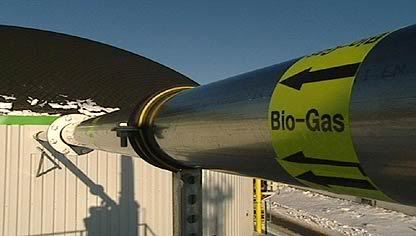
Biogas is the most promising of the biomass based energy generation approaches, with far fewer criticisms being leveled at it (most importantly, there is limited competition between food production and biogas production - the two are often complementary in fact - and the net energy available from biogas far exceeds that of biofuels). It can either be extracted from landfills or produced using "digesters" that process agricultural waste (or occasionally by exploiting natural sources of biogas).

The upper limits for biogas production are not clear, though some studies claim vast amounts can potentially be produced - for example, one European study said that all of Europe's gas needs could be met with biogas. Biogas power generation apparently produced about 14.5 GW in 2012.

Biogas is not only the most environmentally friendly of the biomass based energy alternatives it is also the most versatile, with the gas being able to be used for heat, power (or a mix of both - combined heat and power) or transport.
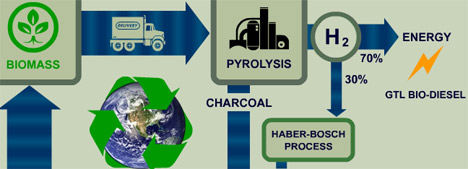
One last use for biomass is the production of biochar. Producers of biochar take dry biomass and bake it in a kiln to produce charcoal. Biochar is the term for what is left over after the energy is removed: a charcoal-based soil amendment. This process is called pyrolysis. Various gases and oils are driven off the material during the process and then used to generate energy. The charcoal is buried in the ground, sequestering the carbon that the growing plants had pulled out of the atmosphere. The end result is increased soil fertility and an energy source with negative carbon emissions.
Distribution of renewable energy

Smart Meters and Smart Grids

Renewable energy (primarily solar and wind power) is often criticised for being intermittent.

In the traditional model of electricity generation and distribution, large, centralised power stations were built with sufficient capacity to handle expected peaks in demand - with significant amounts of capacity idle during non peak parts of the day / year (and brownouts occurring if demand did happen to exceed supply). Consumers were charged a regulated price that ignored fluctuations in supply and demand - instead supply was adjusted as far as was practicable to meet demand.

Adopting a more dynamic (market based) pricing mechanism would allow energy users to have an incentive to shape their energy use to the available supply, thereby enabling fluctuations in supply to be dealt with.

The keys to making this possible are to provide electricity consumers with smart meters and the ability to alter their energy usage based on market price fluctuations. Smart grids are required for electricity distributors to create a more flexible grid incorporating a much more diverse range of power generators.

Supergrids and The Global Energy Grid

As well as making the grid more dynamic, interconnections between grids need to be expanded to enable a greater diversity of suppliers to be available across a wide region - this helps further address the issue of intermittency of supply - the sun may not be shining and the wind may not be blowing in one region however this won't be true across all regions making up a greater grid.

Proposals for extending regional grids into continent wide ones (usually by building HVDC connections between existing grids) tend to be dubbed "supergrids" - examples can be found for North America, Germany and the whole of Europe and between Europe and North Africa.

Buckminster Fuller took this idea to its logical endpoint and recommended the creation of a "global energy grid" as a step towards ending our dependency on fossil fuels.

Energy Storage

The final piece of transforming the electricity grid to distribute 100% renewable energy is building in sufficient energy storage to ensure that suppliers have the ability to react to swings in demand as well as vice versa.

Traditionally energy storage has been available in greater or lesser amounts (depending on what grid you are connected to) in the form of pumped hydro storage.

A wide range of other options have been proposed and explored over the years, ranging from Compressed air energy storage to batteries to flywheels to generating hydrogen (pumped hydro even has an ocean equivalent which is one of the more promising options).

Most battery storage being implemented today involves either lithium ion batteries or flow batteries - however further cost reductions are viewed as being necessary to enable wider availability of energy storage services.

One option receiving a lot of attention recently has been a proposal by MIT Professor Donald Sadoway to build liquid metal batteries.

Adopting alternatives to oil

While it is clear that we can replace all the energy we currently get from fossil fuels with renewable energy, the problem remains that electricity is not a direct substitute for liquid fuels - and that fossil fuels have some other important uses other than providing energy.

Transport

The most important use of liquid fuels is in transport. Increasing fuel efficiency of vehicles (around 3% per year) and substitution of natural gas for oil as a fuel for heavy vehicles has been constraining the growth of oil consumption for road transport in recent years, however this can only ever be a temporary solution - in the longer term we need to use either electricity .

Electrifying as much of the transport system as possible is the first step, with biofuels being used for those forms of transport that cannot be electrified (either liquid biofuel such as ethanol or biodiesel, or compressed biogas) such as large planes and ships.

Hybrid electric vehicles (including plug in hybrids and solar hybrids) are a maturing technology with over 5 million vehicles on the roads now.

These are providing the stepping stone to fully electric vehicles (which are already outselling plug in hybrids in the US). The journey towards fully electric cars has been a slow one with the star example so far being Tesla Motors (other promising projects such as Better Place have fallen by the wayside in recent years, though manufacturers such as Nissan are competing at the lower end of the market and a raft of car makers are building high end electric sports cars.
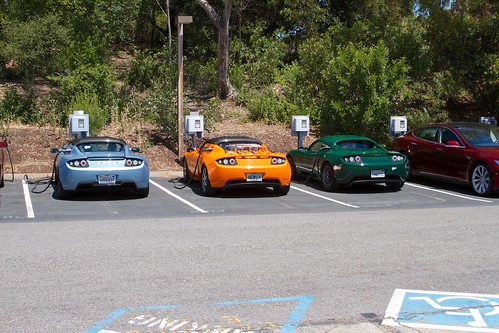
Three problems are holding up the transition to electric vehicles at this point - slow recharge times, "range anxiety" and the relatively high cost of electric vehicles compared to legacy internal combustion engine based vehicles. Tesla are looking to address both of the first two issues by pursuing both fast recharge technology (with various other schemes being implemented around the globe) and a battery swap system similar to that pursued by Better Place.

The IEA has set a target of 20 million electric vehicles by 2020, with further 50% increase in battery performance a key to achieving this goal, following on the 50% increase achieved in the past 3 years.

Cars aren't the only type of vehicle that requires fuel of course - heavier forms of of transport also consume oil. We are now starting to see electric trucks, electric buses and electric boats begin to appear out in the marketplace. Where heavy vehicles such as buses follow the same route on a regular basis they become candidates for recharging while in transit.

Of course, we don't have to simply substitute electric vehicles for existing liquid fuel powered ones. There is a wide range of alternatives available including:

  • Walkable communities
  • Cycling. Many journeys do not need to be made by car, particularly if cities are designed to enable transport by cycle (both by pedal powered bicycles and electric bikes) as well as by foot or rail transit.
  • Transit oriented development
  • Rail transport. Rail transport can be electrified where it isn't already and can provide both transit within cities and long distance travel as well (preferably via a high speed rail network)
  • Exotic options such as Personal rapid transit and Elon Musk's proposed Hyperloop

Bioplastic

Nearly all the plastics sold today come from petroleum, accounting for up to 5% of global petroleum consumption by some estimates. Recycled plastics are a good first step towards reducing oil consumption, however they can only be recycled two to four times, and only around 25% of plastics are actually recycled.

The sustainable alternative to traditional plastic is bioplastic. The cost of producing bioplastic has been falling thanks to improved processes, requiring lower temperatures. Combining this with the increasing cost of crude oil has made bioplastic prices competitive with regular plastics.

Bioplastic production is expected to reach 1 million tons in 2015, out of total global plastics production of around 300 million tons.

Leading manufacturers include Avantium, BASF, Braskem, Cereplast, Metabolix and Natureworks. Bioplastic feedstocks include vegetable oil, corn starch, plant cellulose and mycellium.

Bioplastic doesn't necessarily need to replace all current uses of plastic - other alternatives are materials that have been replaced by plastics in recent decades, including steel, wood, aluminum, glass, cardboard and paper.

Agriculture

Agriculture obviously requires transport to grow and distribute food products, however it also requires fertiliser (at least if we continue to follow the green revolution model), which is usually produced using natural gas.

This can be addressed via a range of techniques - by being more efficient with fertiliser use (which would have many environmental and health benefits), by adopting organic farming techniques, by growing food near where we live, by generating ammonia using air, water and renewable energy - or by getting to the root of the problem and enabling plants to fix nitrogen themselves.

Another way of reducing energy consumption from agriculture is to find new ways of producing food - efforts to produce artificial meat (or "cultured beef", as it is sometimes known) have the potential to reduce the amount of energy required to produce meat by 45%.

Manufacturing and Construction

Manufacturing is a major consumer of energy and raw materials. The amount of energy and other raw materials devoted to manufacturing can be reduced by optimising for recycling - in particular by adopting "cradle to cradle" design and manufacturing techniques.

Distributed manufacturing and 3D printing also have potential for reducing the amount of energy required to distribute manufactured goods.

The construction and ongoing operation of buildings is another major consumer of energy, with "green buildings" and energy efficient devices such as LED lighting that minimise energy consumption being an important part of our clean energy future.

Conclusion

The aim of this post was to demonstrate the following (or at least provide food for thought to irredeemable skeptics) - I hope you've found it thought provoking.

  • There is more than enough renewable energy available to meet all our needs - primarily using solar and wind power - and this can be done at a reasonable cost
  • The keys to shifting to renewable energy are to expand the interconnectedness of our electricity grids, to make electricity demand more dynamic (responding to changes in electricity supply / price) and to put more energy storage in place
  • That we need to be aware of the areas where we use fossil fuels and transform these to use renewable energy - to electrify our transport systems, to adopt alternatives to traditional plastics and to adapt our agricultural, manufacturing and construction processes to reduce the amount of energy required and to eliminate dependencies on fossil fuels

Sunday, August 11, 2013

A Farewell To The Oil Drum

While TOD is shutting down TOD ANZ isn't necessarily following suit (although it is admittedly very dormant at this point). The post below is reposted from Peak Energy and will (hopefully) soon appear at TOD. I started blogging (at Peak Energy) about peak oil in late 2004, having become interested in the topic over a period of years. I'd first started thinking about oil depletion when working on systems for collecting and managing large volumes of oil exploration data in the mid 1990's. Not long afterward I worked for Woodside Energy at a time when their main development project was the Laminaria / Corallina floating oil production facility in the Timor sea. A few years later production from this project had dropped below 50,000 barrels per day from an early peak of 180,000 bpd. Around the same time I came across the writing of Colin Campbell and Ken Deffeyes and began to consider what the global oil depletion picture looked like (the war in Iraq and the steadily rising oil price also added to the interest factor).

2004 was the year where blogging exploded in popularity and a vast range of writers emerged from obscurity. A number of these began mentioning peak oil and a loosely knit community of bloggers quickly formed around the topic. At the time the traditional observers of the topic were mostly retired geologists from the oil industry and academia following in the footsteps of M King Hubbert (such as Jean Laherrerre, Walter Youngquist and Ali Samsam Bakhtiari as well as Campbell and Deffeyes), along with some writers such as Richard Heinberg and a vibrant (albeit wildly pessimistic) online community of neo-malthusians hanging out at forums such as the "Running On Empty" groups, "Energy Resources" and "Alas Babylon" - usually heavily influenced by Jay Hanson's infamous "dieoff.org" site - and various fringe websites like Mike Ruppert's "From The Wilderness" and Mark Robinowicz's "Oil Empire". There were also 2 news aggregation sites focusing on the topic that had started up - Energy Bulletin (now Resilience.org) and PeakOil.com - both of which assembled a steady stream of news on peak oil and related topics.

In 2005 The Oil Drum appeared, with Prof Goose (Kyle) and Heading Out (Dave) quickly building a large following that eclipsed that of the other sites commenting on the subject. I was pleased to be invited to join as a contributor in 2007 and spent a very enjoyable 3+ years writing for the site on a regular basis and co-editing the TOD ANZ site with Phil Hart.

After a time I found a combination of factors led me to become less active and eventually stop writing original work for TOD - in no particular order a couple of changes of job, moving house twice, getting divorced, having a couple of kids who required more of my time and a general depletion of interest caused by writing on the same broad topic for more than 5 years.

It has been disappointing to see some of the commentary about TOD's closure claiming that it indicates "fracking has killed peak oil". Personally I've been amazed TOD has lasted as long as it has, which has been a credit to the editors and staff, especially with so many contributors drifting away over the years.

If I look back to when I first started, none of the peak oil blogs around at the time are still publishing - the ones that come immediately to mind include Past Peak, Mobjectivist, Peak Energy (US), The Energy Blog, Jeff Vail's A Theory Of Power, Peak Oil Optimist, Life After The Oil Crash, Karavans and a myriad of temporary blogs created by a guy calling himself the "Flying Talking Donkey" - all of which ceased for the reasons cited by the TOD board (or due to ill health on the part of the author). This isn't a phenomenon unique to peak oil blogs - none of my favourite blogs from 2004 still exist today - the best sustainability blog of the time, WorldChanging, closed down several years ago, Bruce Sterling's "Viridian Design" did the same as did Billmon's "Whiskey Bar" and Jeff Well's "Rigorous Intuition".

So from that point of view TOD has done remarkably well to have lasted for more than 8 years.

The decision to narrow the focus of the site some years back didn't help in my view but I suspect the end result would have been the same regardless - though I tend to think allowing all of the "Limits To Growth" to be analysed may have kept the energy levels of the contributors up for longer and perhaps encouraged a wider range of contributors to participate.

It is true, however, that global oil production has not declined in the way that many (if not all) of the peak oil writers of 10 years ago predicted. While the predictions can be qualified ("conventional oil production has peaked" or "oil production per capita has peaked") the "total liquids" number clearly hasn't yet and this is the important one along with the oil price.

There are 4 obvious avenues open for dealing with peaking conventional oil production:

  • 1. Find more conventional oil
  • 2. Exploit unconventional oil sources
  • 3. Become more efficient in our use of oil
  • 4. Switch to alternatives

Over the years a lot of peak oil analysis has tended to focus on how far the first item can be pushed and what could happen once the limit is reached, with short shrift being given to the other 3 avenues (unless "powerdown" counts as "more efficient use of oil") - and even the amount of conventional oil available being somewhat underestimated (Iraq being the example I always used).

The ability of the oil industry to expand unconventional oil production (the shale oil boom being the obvious example though production of tar sands and heavy oil deposits are also increasing) has been the key factor in pushing the date of the peak out further into the future (I liked Stuart Staniford's quip that this could possibly be characterised as the "frantic scraping of the bottom of the barrel").

The dawning of the "gas age" has also kept fossil fuels in the picture for time being, with substantial unexploited conventional natural gas reserves being developed and unconventional gas production growing strongly.

While these developments have thus far dashed the hopes of the doomer community the fact remains that even if the whole world was made of oil, there would still be a finite supply of it - and thus at some point we will need to transition to alternative sources of energy, assuming the temperature of the planet hasn't risen to a point that makes it uninhabitable in the meantime.

It's this transition to alternative energy which captured most of my attention when writing - and which I'll make the topic of my second parting post for TOD - "Our Clean Energy Future" - which I hope to have ready soon.

Thursday, June 28, 2012

Gordon Campbell asks has Peak Oil Peaked?

New Zealand journalist Gordon Campbell has just written an interesting feature "Has The Peak Oil Idea Peaked?" in his on-line publication "Werewolf". Campbell's key point is that there are now increasing volumes of unconventional oil and gas production entering the market. And that the old oil barons and the new unconventional oil barons both want to maintain prices that a) make shale oil and tar sands profitable b) don't rise so much as to incentivise renewble energy sources and c) don't cause dropping demand as was the case in 2008.
...both the new and the old oil and gas suppliers have a common interest in the price staying out of the basement, and up in the mid-range. The conventional players within OPEC and the big players outside it can live with Brent prices in the $90-100 price range. Go any higher, and the fear both within and beyond OPEC is that this could cause a re-run of the latter half of 2008, when sky-high oil prices sparked a massive global investment in alternative, cleaner forms of energy. For the industry, the trick will be to keep prices just high enough to protect the profit margins that are required (on top of the higher costs of exploration and extraction) but without throwing renewables a life line. That’s going to be the challenge: let prices rise too high and renewables will get breathing space.
...the frackers and the deepwater oil and gas explorers...need the price to stay relatively high (maybe just south of $100 a barrel) to deliver a return on their relatively expensive activities. Trouble is, the break-even estimates do vary quite widely on this point – with anything from $60-130 a barrel being cited as the break-even point for fracking when conceived as anything more than a hit and run operation.
As the IEA says its not a good outlook for renewable energy to replace fossil fuel energy quickly enough to avert dangerous climate change. Campbell concludes:
the environmental imperatives behind the peak oil concept remain. Thanks to the resilience of the fossil fuel industry though, the political battle has suddenly become a whole lot harder.
Campbell's feature is well worth reading.

Friday, September 2, 2011

New Zealand Officials Muzzled on Peak Oil?

from Denis Tegg at oilshockhorrorprobe 

The government has finally released its Energy Strategy. There are cosmetic changes from the Draft version but it's no surprise that the final Strategy continues to completely ignore the threat of peak oil.  There were many submissions, including my own, which detailed the raft of recent reports from oil and energy experts, think tanks and government institutions which are all pointing to an imminent supply and oil price crunch. And in 2009 government officials themselves gave strong warnings to Ministers. So since 2009, have the officials been muzzled?

Wednesday, August 17, 2011

New Zealand at greater risk from oil shocks - official advice ignored

This is a guest post from Denis Tegg.

In November 2009 senior officials warned the government --
  • the risks of oil price shocks and a physical shortfall in the world supply are issues of "strategic importance"

  • New Zealand is more vulnerable and may suffer more than other OECD economies

  • new technologies and fuels will only "marginally" reduce New Zealand's vulnerability to these oil supply/price risks

  • without "sufficient incentives" New Zealand's resilience will decrease even further

  • a substantial increases in domestic oil production will not insulate New Zealand from higher oil prices because oil is traded internationally and we would still pay the international price.

This advice from senior officials was given to Transport Minister Steven Joyce and Energy Minister Gerry Brownlee in a report entitled "Oil Prices and Transport Sector Resilience" and obtained under the Official Information Act.

Astoundingly the warnings of a clear and present danger to New Zealand's economy have been almost totally ignored by government. Instead of tackling the strategic risks identified in the report, and bringing in policies to lower New Zealand's oil dependency, the government has -
  • perversely initiated policies which increase New Zealand's exposure to oil price and supply shocks. It has abandoned plans for mandatory fuel efficiency standards for light vehicles, and has vastly increase spending on motorways which perpetuate urban sprawl and New Zealand's car and oil dependence, while public transport funding has languished. 

  • other practical policy ideas in a 2008 New Zealand Transport Authority report to lower New Zealand's oil dependence have been kicked to touch.

  • having received advice in 2009 that it clearly does not wish to hear, it has steadfastly avoided asking for any further advice from officials about New Zealand's oil vulnerability. Instead it has instructed its officials to downplay and marginalise the risks posed by peak oil, as is evidenced by a peak oil presentation given recently by an MED official. That presentation is completely at odds with the clear and compelling warnings given in the 2009 Report.


How do officials assess the risk?

The report begins by documenting New Zealand's extreme reliance on imported oil. Oil accounts for 51% of New Zealand's total consumer energy, transport accounts for 80% of New Zealand's oil consumption and 14% of household expenditure is made on transport costs.

The report then tackles the issue of peak oil (without using that phrase of course). It notes that in 2008 the International Energy Agency became more pessimistic and warned that current investment in oil production is insufficient and that faster than expected decline rates in larger oil fields from politically volatile countries --
"increase the risks of a sudden oil price shocks, caused either by political tensions in major supplier countries or by a physical shortfall in supply"

The report then proceeds to pull the rug from under the government's flagship energy policy -- the Petroleum Petroleum Plan to find more oil offshore from New Zealand. The report states that increases in domestic oil production -
"would not necessarily insulate the New Zealand economy from oil price volatility or long-term price rises. This is because like all internationally traded commodities domestic oil and fuel prices are largely driven by the international price"


Effect on New Zealand economy generally

Echoing many of the points made in previous posts here and here on this blog, the report confirms that "reflecting the importance of energy to economic activity, high or volatile prices can have a pervasive effect on economic performance", citing as examples the cost of asphalt and bitumen to roads and fuel costs which dominate the operating costs of the fishing and aviation sectors.

"Our exposure to oil price changes is more acute than many of our trading partners due to a distant from international markets" and

"tourist visitor numbers are at risk from significant increases in aviation fuel costs" and


"international and domestic transportation costs largely determined by oil prices therefore play a significant role in the competitiveness of businesses right across the economy. The transport sector's exposure to increasing and volatile oil prices is therefore an issue of strategic importance"

New Zealand's vulnerability relative to other countries

  • New Zealand is a comparatively large user of oil for transport fuels. We have a low and dispersed population leading to high levels of freight between centres

  • New Zealand has a very low energy productivity at 3.6 litres of fuel per unit of GDP compared to say Sweden which is of comparable size and population density requires only 2 litres per unit of GDP - see graph below -

 
  • New Zealand has one of the highest per capita car ownership rates in the world

  • the fuel economy of private cars is low compared to most other OECD countries. Even if New Zealand could achieve a 20% improvement in fuel efficiency by 2030, New Zealand would still be 45% less fuel efficient than Europe in 2030


    • New Zealand has one of the highest levels of vehicle kilometres travelled per capita in the OECD while having one of the lowest levels of personal consumption expenditure per capita

    • Road transport accounts for 84% of travel in urban areas. Countries like Australia and the US with poor public transport options are however better able to cope with higher oil prices because they have higher GDP per capita

    • we are far away from key markets for goods and tourism and therefore more affected by oil prices than in most OECD countries


    Report's Conclusion
    "if real long-term oil prices continue to increase as forecast New Zealand's economy may suffer more than other economies". Overall "the transport sectors resilience to increasing all prices is relatively low"
    In complete contradiction of the 2011 MED presentation that "new technologies will save us" the 2009 report bluntly states that "New Zealand's vulnerability will be reduced marginally by the combined availability and affordability of new technologies such as electric vehicles and second-generation biofuels"

    Again completely contradicting the government's position that there is no need for government intervention and that the market will provide all the solutions, the report states "the cost, supply, convenience and reliability of new technologies are key barriers and that without incentives the transport sector's resilience will decrease further"

    Our Economic Titanic
    Unlike the global financial crisis which took most experts and our government by surprise, the severe impacts of rising oil prices on our economy are well understood and thoroughly predictable. The government has received warnings that we are far more exposed than other developed nations to these risks.


    Yet like some delusional captain of the Titanic this government accelerates the ship of state on a collision course with the oil crunch iceberg. Unlike the global financial crisis, the government cannot use the excuse that they were not warned. Its failure to heed these warnings and act decisively will surely go down in history as New Zealand's economic Titanic event.

    Tuesday, August 16, 2011

    Time to refine energy security

    The Canberra Times has a guest editorial from Jenny Stewart on energy security and peak oil - Time to refine energy security.
    For the past six months our national attention has, understandably, been focused on the carbon tax issue.

    The policy agenda now needs to move in a related, but different direction. The reason is a three-letter word – oil.

    While oil producers will be affected by the carbon tax, politics ensures that there will be no tax on petrol.

    Yet oil is, arguably, one of Australia’s key energy problems. As a nation, we passed ‘‘peak oil’’ some time ago. Domestic production plateaued more than 20 years ago, and since 2005, has been in decline. The oil that is left is a long way offshore, and a long way down. Extracting it will be costly and risky.

    Australian refining capacity is more constrained now than it was a decade ago. South Australia lost its one oil refinery in 2003. A number of the refineries in Queensland, Victoria and NSW are small in scale, and subject to stiff competition from imported, refined products. Further rationalisation of refining capacity seems likely as imports continue to increase, particularly from large-scale refineries in Asia.

    The government (in the form of the National Energy Security Assessment released in 2009) acknowledges challenges ahead, but tells us that, fundamentally, all is well. Energy security (that is, adequacy, reliability and affordability of supplies) is assessed as ‘‘high’’ until 2018, with only moderate concerns for 2023. Essentially, the assessment assumes that, because markets will continue to operate, there is no need to worry.

    Although oil prices will continue to rise, the resilience of the Australian economy will ensure that we can cope. While domestic refining capacity is expected to decline, this is not considered to be a concern, so long as more facilities are built for handling imports. The assessment does not examine the impact of possible disruptions in oil supplies from the Middle East. Indeed, the reader would be hardpressed to realise that oil is a resource whose future is problematic.

    Now, price signals are important inputs into public policy. But in the case of oil in particular, there are good reasons to be sceptical about the merits of relying on this mechanism as a basis for policy. World oil prices subside when growth declines, and pick up again when growth gathers pace. And as we saw when the oil producing nations began to exercise their market power in the 1970s, they can spike rapidly. But over the longer run, oil prices do a poor job of reflecting the scarcity of the resource.

    Internationally, as in Australia, rates of oil use exceed the extent to which new reserves are being found. Planetary ‘‘peak oil’’ will soon be upon us. Given this situation, the price of oil should have been rising steadily over the past 20 years, because producers would be holding back present-day production, in order to receive higher prices later. Yet while there are short-term fluctuations, the inflation-adjusted price of oil has proved remarkably steady over the past two decades, increasing only in recent years as demand has accelerated.

    Governments are thinking longer term, but not in the way an environmentalist would want. Nations are looking far less at the greenhouse gas equation, and far more at economic growth and energy security. Hence the efforts in Canada to extract oil from tar sands.

    Almost as much energy goes into the process as comes out of it, yet Canada’s federal and provincial governments remain committed to the industry. Despite the recent disaster in the Gulf of Mexico and in the face of the protests of conservationists, the US is again moving towards oil-drilling in the Arctic.

    For countries with some oil reserves of their own, there are difficult questions to answer about the extent to which local production should substitute for imports. Certainly, since the Hawke government deregulated the industry in 1988, Australia has been content to leave the decision about whose oil to use, to market forces. As a result, our petrol and diesel prices are low by international standards and our transport (and food production) systems are more dependent upon oil than ever. But these very factors make us vulnerable to geopolitical change. Not only that, we are at the end of some very extended supply chains.

    New Zealand’s Tui Oil Field - Peak Oil With Bells On

    This is a guest post from Denis Tegg.

    One of the least understood elements of peak oil is the rapid decline rate of production from the peak for any given oil field. For an example of just how severe and steep the decline rate can be, look no further than the recent announcement that the Tui oil field in the Taranaki Basin has had its remaining oil reserves slashed by 1/5, and that production will fall off a cliff. For a New Zealand oilfield, this is peak oil in action with bells on.

    We are all used to seeing breathless media announcements of "huge" new discoveries of oil. What we hardly ever hear about is when oilfields inevitably start to rapidly decline. No surprises therefore when the Tui reserve downgrade from 50.5 million to 40 million barrels was buried deep in the business section of our press and never made the front pages.

    The remarkable story about the Tui oil field completely missed, or ignored by the business media, is just how quickly the field reach peak production, and how rapidly it’s decline will be.

    It was only four years ago on 30 July, 2007 that Tui began production. 31 million barrels of oil have been produced in those four years. But the remaining 9 million barrels of expected reserves are projected to dribble out over the next 9 years before the field is fully depleted in 2020.


    The steepness of the decline can be seen from this graph from a July 2011 New Zealand Oil and Gas report -- (representing its 12.5% stake in the Tui field). If you focus on the dark blue part of the graph at the bottom of each column you can see that NZOG’s share of production will fall from 270 kboe in 2012 to 200 kboe in 2013 -- representing a decline of 26% in oil flows for Tui in just one year.  

    The overall decline rate for the Tui oilfield in the four years between 2012 and 2016  is a staggering 59%!

    Contrast this with the super optimistic projections for Tui when it was first discovered. As Greg Peel of International Business Times points out --

    "Tui's reserves have been constantly upgraded over its life, suggesting a well life beyond 2030".

    The steep decline rate at Tui should not be a surprise. As I pointed out in April, the IEA noted in its 2010 New Zealand Review
    "recently commissioned producing fields, like Tui for example, are relatively small and have a high rate of depletion"
    Note : The same graph also shows a  steep decline of 38% in 4 years for the Kupe oil field (light blue) which is also very high by international standards.

    Why is this important?

    It confirms that in the next four -- five years domestic oil production in New Zealand will fall off a cliff, at the very time a global oil supply crisis is unfolding. We are already hugely dependent on oil imports and vulnerable to any disruptions to supply. We will become even more dangerously dependent on a dwindling supply of oil from volatile world markets.

    Meanwhile the government's "response" to peak oil is misguided and pathetic. We have no plan to lower our dependence on imported oil, other than “drill and hope”. No -- it's time to do a Thelma and Louise -- let’s all accelerate down the white elephant billion-dollar "roads of significance to National" and race over the oil crisis cliff!

    Friday, August 12, 2011

    Public Receptive to Peak Oil Debate and Policy Ideas - Survey

    This is a guest post from Denis Tegg.

    It's a common misconception that only "greenies" and "doomsters" are concerned about peak oil. This view perhaps explains why politicians and the mainstream media have marginalised or ignored the issue. However a recent US survey of public opinion reveals that, in fact, those Americans who identify themselves as "very conservative" politically or who are "strongly dismissive" of climate change are among those most concerned that rising fuel prices are harmful to the economy and public health.


    Overall nearly 2/3rds -- or 65% -- of all respondents to the US survey said that if oil prices triple it would be "very harmful" to the economy, and 44% said it would be "very harmful" to public health.

    These are the key findings of a study published online this week at the American Journal of Public Health.

    Here is the breakdown by idealogy - note: those who identified themselves as "very conservative" were 20% more concerned than those who said they are "very liberal"


    and here is the breakdown by views on climate change - ( strong concern about peak oil from those who are dismissive of climate change is not an endorsement many would wish for, but it indicates that when peak oil is couched in immediate economic terms, then climate sceptics are almost as worried about oil prices as those who are alarmed about climate change )

    New Zealand Poll
    The US survey findings aligns closely with a poll carried out by WWF in New Zealand in August 2010. In that poll 72% of New Zealanders believe it is the government's task to plan ahead, and invest now in public transport and alternative fuels before the price of oil rises. The NZ survey did not break down opinion among “liberals” and “conservatives” but it seems likely that ideological results would be similar here. Further polling and focus group surveys would be useful.

    Latent Unease
    For some time I have sensed a general feeling of unease in the public about oil prices, particularly since the latest spike began in late 2010, so soon after the 2007 -- 08 oil shock. There is a sense that this is not "normal", but for most people they cannot quite put their finger on the reasons for fuel prices rising and being so volatile. This latent sense of unease is confirmed in the US study's conclusions where they say -
    "although Americans are unlikely to be aware of the concept of peak petroleum, the level of expert agreement on the issue, or the potentially significant impacts on society, the public does possess a latent sense of an impending energy problem"


    What are the takeout messages from the US and New Zealand opinion surveys?

    To me they are --
    1   there is a broad consensus across the political divide that peak oil/oil price shocks are dangerous and damaging to people's well-being and the economy

    2    to a far greater extent than previously thought "middle New Zealand" as well as those identifying themselves “far left" and the "far right" are open to engagement and debate on peak oil and its implications, from both the media and politicians.


    3   there is sufficient concern to indicate that the public are already receptive to the major political parties proposing bold policies to lower our dependency on imported oil and as to how we might transition to alternative sources.

    Will politicians and media have the courage?

    probably not.  As Dave Allen colourfully puts it -
    "In a country run by responsible adults, these prudent warnings based on the best available science -- would be blaring from every political and cultural orifice. In a country run by amoral, narcissistic, opportunists, they are whispered at the fringes – in the hushed politeness of power-point presentations, on fringe websites, in meagerly-read books, and among small groups of alarmed citizens."

    Tuesday, August 9, 2011

    New Zealand Government’s Response to Peak Oil – In time we hope something will turn up

    This is a guest post from Denis Tegg.

    On July 8 I attended a forum on peak oil organised by the Sustainability Society. Dr Richard Hawke from the Ministry of Economic Development gave a presentation  on behalf of the New Zealand government entitled "Peak Oil - New Zealand's Response". I came away with emotions ranging from frustration to anger and embarrassment.

    So I thought it would be cathartic to dissect the presentation --

    Dr Hawke began with a typically confusing introductory slide on electricity generation, when anyone with a basic knowledge of peak oil knows that it's a liquid fuel problem, not an electricity issue. We cannot power our cars, trucks ships and planes on electricity.

    Next was a cringingly awful attempt to paint peak oil as part of an historical continuum of false prophecies on oil production. Awful because all of the examples used were from the 19th century or early 20th century before the concept of peak oil was understood. Who cares what someone said in 1865? The glaring omission from the examples given was of course the prediction from US Shell geologist Dr King Hubbert. He predicted in the 1950s that US oil production would peak in 1970 -- which it did, and has declined steadily ever since in spite of the best technology, most intensive drilling on the planet and record high prices. Similarly omitted were the projections of Colin Campbell and other peak oilists in the late 1990’s who predicted that global crude oil production would peak around 2005 -- 2006 -- which it also did.

    Dr Hawke then attempted to paint peak oil proponents as pessimists who underestimated oil reserves, exaggerated future demand, while not giving enough emphasis to substitution and technological advances -- the archetypal cornucopian view. Firstly, the argument about reserves is a straw man because peak oil is essentially concerned with the flows -- production of oil -- (which have been flat since 2005 despite record high prices and advances in technology) rather than how much oil might or might not be in the ground.

    As to exaggerating future demand, surely the government is not seriously suggesting that soaring demand from China, India, Middle East and other developing nations is magically going to decline? Again this is a typically Western-centric view which wrongly transposes the declining oil demand trends in OECD nations like New Zealand to the world as a whole.

    The presentation then suggested that technology and alternatives will be the silver bullets that saves us. But the presentation conveniently fails to mention the higher cost, much lower energy return on energy invested and the planet-frying effects of using alternatives such as the tar sands in Canada. The slide actually shows the the extreme and dangerous depths to which drilling must go!

    But what really got me wound up was the selective use of the International Energy Agency's information, which the government believes provides “credible information on the global oil market”. On the one hand the government takes as gospel the projections of the IEA that as yet undiscovered fields and unconventional oil will meet demand out to 2035. This selective faith in the IEA is maintained despite -

    • the IEA forecasts on oil production having to be revised downward in huge chunks every year for the last six -- eight years
    • peak oil scientists having been far more accurate with their production forecasts in the same timeframe
    • peak oil experts such as those at Uppsala University providing analysis that shows the IEA’s forecasts for finding undiscovered oil fields are around three times greater than historical norms

    But on the other hand the government is quite prepared to ignore other recent IEA announcements - calling for large-scale government intervention - because it does not suit its “the markets will solve everything” ideology . The IEA said in its 2010 Report on NZ that the government should “give priority to enhancing energy efficiency in the transport, commercial buildings and industry sectors by defining clear objectives for the sector supported by adequate cost-effective measures and long-term investments"

    The next slide shows the government’s blind faith reliance it has in the IEA's flawed oil price modelling. The slide shows an oil price in 2035 – (24 years from now) at $US135 a barrel under the (worst-case) “existing policy” scenario. Does anyone seriously think the world oil price will be only $US15 higher in 24 years than it is now? Yet the government continues to place faith in IEA price modelling.

    The next slides selectively depict various scenarios for future oil production. But only the most optimistic scenarios are shown - a “new policies" scenario and a “green revolution” -- 450 ppm Co2 or 2° of warming" scenario. Post Kyoto there is scant evidence of world governments actually implementing either of these scenarios. So why is the far more pessimistic "current policy" scenario omitted from the presentation?

    Domestic policies

    This is where the government's so called "response" to peak oil is set out. Four actions to "reduce our dependence on oil" are outlined –

    • New Zealand Emissions Trading Scheme
    • Encouraging entry of biofuels and electric vehicles to the NZ market
    • Investment in public transport infrastructure; and
    • The Petroleum Action Plan

    I want to concentrate on the government's response on biofuels and electric vehicles and its Petroleum Action Plan, as the ETS and funding for public transport infrastructure have been well canvassed elsewhere.

    Biofuels Grant Scheme
    Slide 27 brazenly suggests that the government is actively encouraging biofuels and electric car uptake as serious policy initiatives as a response to peak oil. Frankly I found this an insult to the intelligence of the forum audience and the public at large. Why? -- Because these are minuscule and pathetic policy responses. 

    Here is the analysis of these 2 policies done by WWF....

    “In the first eleven months of operation (July 2009 – May 2010), an average of 44,620 litres of biodiesel were covered by the scheme, which is roughly equivalent to 38 tonnes of fuel. Extrapolating this average over a whole year equates to 456 tonnes per year. Total oil consumption in NZ in 2008 was: 5,737,000 tonnes. At this rate, biodiesel covered by the scheme would comprise 0.008% of total NZ oil consumption.”

    Road User Charges Exemption for Light Electric Vehicles
    WWF  “The government predicts 127 electric vehicles will obtain the exemption by 2012 when the scheme expires, with combined annual revenue foregone in road user charges over its four year duration is projected to be less than $105,000.”
    $105,000 is less than 0.002% of the government’s planned spending on roads

    Petroleum Action Plan

    The second much touted “response” is the Petroleum Action Plan (PAP) the aim of which is to develop New Zealand's petroleum potential.

    In previous posts I have described this policy as "drill and hope" or “hope to drill” Guess what? The government has confirmed that is exactly what it is! There quite unashamedly in slide 29 is the statement --
    "in time it is hoped this will improve our net position and reduce our dependence on imported oil".


    Let's just repeat that - a major policy plank of the government's response to peak oil is -
    "in time" (7 -- 10 years at best before any flows of new oil can be expected, but with the oil crisis unfolding right now)
    "it is hoped" (would it help if we all got down on our knees and prayed?) that something will turn up. Yet this is put up as a credible response to peak oil which is already causing higher inflation and substantial and negative impacts on GDP?

    Already huge cracks are appearing in the petroleum plan ….

    • In late 2010 Exxon pulled out of exploration in the Great South Basin
    • despite a record number of wells being drilled offshore of Taranaki, very little new oil has been found in the last two years
    • Petrobras is angry with the government that it was confronted with major protest action offshore from East Cape which disrupted its exploration work. The company left early, and who knows whether they will return.
    • Grey Wolf has withdrawn its application for offshore drilling in Golden Bay
    • Not one company has taken up available exploration permits off the coast of Northland.  The government surreptitiously placed this news on the MED website in the past few days with no ministerial press release. When confronted the government said the global financial crisis and the Gulf of Mexico oil spill was to blame. Well hello! Was that not blindingly obvious when the PAP was formulated.? I pointed out these issues in an earlier post .

    Yet in spite of these major setbacks in five different much touted offshore oil basins, the government's presentation has the gall to put up this graphic suggesting we will be "saved" by new oil discoveries.

    As I pointed out in a post in November last year about this very same graphic -- if you strip away these yet to be discovered oilfields -- you are left with the real world situation of New Zealand oil production having already peaked and declining steeply to zero by 2023.


    Conclusion
    This was a non-response to peak oil. It was a "let's pretend is not happening" and if it turns out it is happening "let's hope and pray that something will turn up"

    Am I my feeling any better having got this off my chest? Well not really -- because there are effective policy responses that the government can make.  But due to its ideological blinkers, they will continue to ignore them.

    Labour has yet to announce its energy policy for this year’s election. Whether it too is unprepared to take bold and effective action on peak oil remains to be seen. I expect to be equally disappointed.

    Note: Prof Bob Lloyd of Otago University also gave an excellent  presentation on peak oil at the forum which you can view here